
The preschool art center is an indispensable part of the early education environment. It is far more than just a space for crafts; it is a core learning zone where children cultivate creativity, cognitive abilities, and fine motor skills. As a factory specializing in high-quality wooden educational toys for kindergartens and educational institutions worldwide, we understand the critical role a well-designed art center plays in both child development and teaching efficiency.
A high-quality preschool art center setup is essential for attracting and retaining students while providing teachers with an efficient and safe working environment. For distributors, understanding the latest trends and educational value of these setups is the cornerstone of successfully marketing and selling educational products.
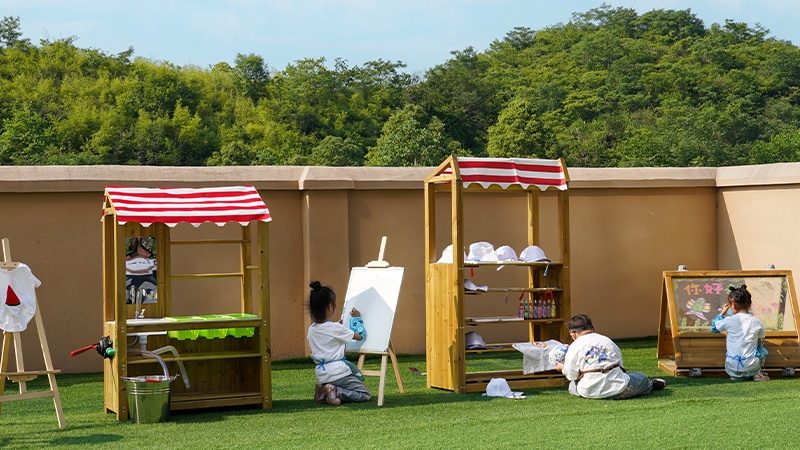
Table of Content
- The Educational Foundation: Why is the Art Center Important in Preschool?
- Core Components: Standards for Selecting Preschool Art Center Materials
- Space Optimization: Professional Configuration of Preschool Art Center Furniture
- Practical Guide: Six Key Steps for Preschool Art Center Set Up
- Design Inspiration: Art Center Ideas for Preschool & Toddlers
- Safety and Compliance: Procurement Advice for Institutions and Distributors
- Future Trends: Integrating Art Centers in the Digital Age
1. The Educational Foundation: Why is the Art Center Important in Preschool?
Art education plays a crucial and multifaceted role in early childhood development, extending beyond the simple acts of drawing or crafting. From a pedagogical perspective, a high-quality preschool art center stimulates multiple areas of a child’s development simultaneously:
- Cognitive Development: Art is fundamentally a problem-solving process. When children select colors, plan compositions, and mix materials, they are engaging in critical thinking and scientific exploration. For example, experimenting with mixing two primary colors to create a new one is a foundational science lesson.
- Fine Motor Skills: Actions like gripping a paintbrush, using scissors, and gluing small objects are essential exercises for developing hand muscles and hand-eye coordination. These skills form the foundation for future writing and daily self-care abilities.
- Social-Emotional Development: In the art center, children learn to share tools and space, and express their feelings and ideas. Art serves as an emotional outlet, helping children process complex emotions.
- Language and Literacy: Children naturally expand their vocabulary as they discuss their artwork and describe the materials they use. Teacher prompts can further guide them to verbalize their creative process.
According to the National Association for the Education of Young Children (NAEYC), art provides a “means of communication beyond language,” helping children develop their full potential. The art center should be viewed as a “discovery center,” not merely a “craft center.”
2. Core Components: Standards for Selecting Preschool Art Center Materials
Choosing the right preschool art center materials is crucial for the successful operation of the space. For educational institutions, materials must be safe, durable, and open-ended, allowing children to use them in multiple ways.
| Material Category | Our High-Quality Wooden Recommendations | Selection Criteria |
| Drawing/Painting | Wooden easels (easy to clean, height-adjustable), wooden-handled stamps, natural charcoal sticks. | Safety: Non-toxic paints; Durability: Built to withstand frequent use. |
| Construction | Natural wooden blocks (various shapes and sizes), Rainbow wooden peg dolls, wooden connecting blocks. | Open-Endedness: Encourages imagination and varied combinations; Tactile: Warm, natural wood texture benefits sensory integration. |
| Natural Materials | Small wooden slices, bark, dried wooden beads, natural-colored wool felt. | Eco-Friendly: Meets global demand for sustainable educational products. |
| Storage & Organization | Multi-tiered wooden storage shelves, wooden trays with dividers, mobile wooden utility carts. | Accessibility: Children can independently retrieve and put away materials; Space Efficiency: Maximizes the utilization of the art center space. |
3. Space Optimization: Professional Configuration of Preschool Art Center Furniture
Wooden products hold a significant market advantage in this section. High-quality preschool art center furniture is more than just tables and chairs; it’s a critical investment affecting instructional flow, child comfort, and product longevity.
A. Wooden Easels and Display:
- Selection: Double-sided or multi-sided wooden easels. Wooden easels should feature height-adjustability to accommodate children of different ages and sizes. Easel surfaces should be made of easy-to-clean material, complete with wooden trays for paint storage.
- Advantage: Wooden easels are more stable, eco-friendly, and aesthetically pleasing than plastic alternatives, meeting the high standards of upscale educational institutions.
B. Work Surfaces (Art Tables):
- Selection: Sturdy, scratch-resistant wooden art tables. Edges should be rounded for child safety. The height must meet ergonomic standards, ensuring children can comfortably create while sitting or standing.
- Customization Needs: Consider offering art tables with built-in sinks or removable storage bins for easy teacher management and cleaning.
C. Storage and Organization Solutions:
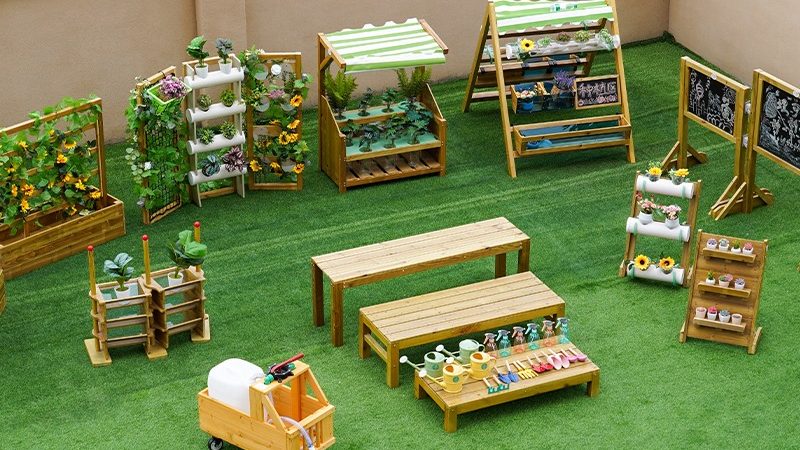
- Selection: Open-shelf wooden storage units and divided cabinets. The ideal preschool art center furniture storage solution ensures all materials are visually accessible and allow for independent access.
- Example: Our tiered wooden storage cabinets help teachers separate paints, paper, and tools effectively, fostering a sense of organization in the children.
4. Practical Guide: Six Key Steps for Preschool Art Center Set Up
An efficient preschool art center set up requires careful planning to maximize space utilization and minimize clutter.
Step 1: Determine the Location (Location Matters)
- Ideal Location: Near a water source (for easy cleanup), near natural light (to enhance the creative atmosphere), and away from high-traffic pathways (to prevent disruption).
Step 2: Establish “Wet” and “Dry” Zones
- Wet Zone: Place easels, paints, clay, and other materials that require significant cleanup here. Use easy-to-clean flooring and furniture (like our water-resistant wooden art tables).
- Dry Zone: Place scissors, glue sticks, crayons, and writing materials. This area can be integrated with a preschool writing center to encourage the blending of art and literacy skills.
Step 3: Implement an Organization System (Organization is Key)
- Use uniform wooden containers, labeled with pictures and words. Ensure every item has a “home” so children can learn to put things away independently.
- Distributor Advice: Market modular wooden storage systems, which allow educational institutions to flexibly combine units based on space and budget.
Step 4: Integrate the Writing Center
Designate a portion of the art center space as the preschool writing center. Provide various types of paper, envelopes, wooden letter stamps, and wooden writing tools of different thicknesses. Art creation is a foundational skill for writing.
Step 5: Utilize Vertical Space
Use wooden wall-mounted storage boards or display racks to store thin items (like paper, drawing boards) and as a space to exhibit children’s work.
Step 6: Maintenance and Rotation
Materials in the art center need regular rotation to maintain children’s novelty and interest. Ensuring quick cleanup and organization at the end of each day is critical for efficient operation.
5. Design Inspiration: Art Center Ideas for Preschool & Toddlers
To help inspire your target customers, we offer art center ideas for preschool and art center ideas for toddlers tailored to different age groups.
A. Art Center Ideas for Toddlers (18-36 Months)
For toddlers, the focus of art activities is on Sensory Exploration and the Process rather than the final product.
- Core Materials: Large, easy-to-grip wooden crayons, thick cardboard, non-toxic edible paints (like yogurt paint), large sponges, easy-tear tape.
- Setup Focus: Must be conducted under strict adult supervision. All materials should be non-toxic, and small choking hazards must be avoided. Use low, stable wooden tables and chairs.
B. Art Center Ideas for Preschool (3-5 Years)
Children in this stage begin to create consciously and express specific themes.
- Core Materials: Scissors (with safety rounded tips), paper of different textures, natural fiber yarn, recycled wooden scraps, stamps, collage materials.
- Theme Rotation: Establish a “Nature Art Corner” (using leaves, small stones, and other natural materials) or a “Construction Art Corner” (using various sizes of wooden blocks).
C. Kindergarten Art Center Ideas
Kindergarten art center ideas are typically more complex, introducing a wider range of tools and more specific skill instruction.
- Core Materials: Watercolor paint trays, oil pastels, fine-tip markers, rulers, geometric stencils.
- Skill Integration: Introduce activities requiring higher fine motor skills, such as sewing (using large wooden sewing boards) and weaving (small wooden looms).
6. Safety and Compliance: Procurement Advice for Institutions and Distributors
As a professional wooden educational toy factory, we recognize that quality control and safety certification are the top priorities in your purchasing decisions.
A. Why Choose Wooden Educational Art Supplies?
Wooden materials offer a natural, warm texture that positively impacts children’s sensory integration development. More importantly, they are durable, sustainable, and easily repairable, making them a long-term investment for kindergartens and educational institutions. Our wooden products are strictly sanded and treated with non-toxic coatings, complying with international safety standards.
B. International Safety Standards and Certifications
Educational institutions and distributors must verify that suppliers possess the following international certifications to ensure product safety and smooth customs clearance:
- CE (Europe): Certifies conformity with EU safety, health, and environmental requirements.
- ASTM F963 (United States): Standard set by the U.S. Consumer Product Safety Commission for toy safety.
- CPC (United States): Children’s Product Certificate, a necessary document for entry into the U.S. market.
C. Wholesale Advantages for Distributors and Institutions
We understand the cost and logistics requirements of bulk purchasing. Our products are designed to offer:
- Modular Design: Facilitating transportation, assembly, and inventory management.
- Customization: We can customize wooden furniture and storage systems based on a kindergarten’s specific space dimensions or branding needs.
- High Durability: Our wooden preschool art center furniture and materials are designed to withstand years of heavy use, significantly reducing replacement costs for institutions.
7. Future Trends: Integrating Art Centers in the Digital Age
The art center of the future will not be entirely replaced by electronic devices but will blend traditional tools with new technology. For example, tabletops could incorporate projected surfaces, combining art creation with digital interaction. We are exploring the development of toys that integrate wooden materials with simple circuits, encouraging children to learn science and engineering through art (STEAM).
Conclusion
An Ultimate preschool art center is built through thoughtful design, high-quality materials (especially durable, eco-friendly wooden furniture and tools), and a deep understanding of child development theory.
Whether you are a kindergarten director, an educational institution procurement manager, or a distributor committed to providing top-tier educational products, investing in a well-designed, safe, and high-quality art center is the best way to lay the foundation for the next generation of creativity.
We look forward to partnering with you to create the next generation of high-quality art learning spaces for educational institutions worldwide.
