
Preschool daily schedule planning is the foundation of any successful early childhood classroom. Whether you are a distributor looking to bundle the right educational materials or a kindergarten director aiming to improve classroom management, a well-structured routine is essential.
In this guide, we will break down the ideal timetables for different age groups and show you how high-quality wooden educational tools can transform a chaotic day into a seamless learning experience.
Table of Contents
- Why a Consistent Routine Matters
- The 3 Year Old Preschool Daily Schedule
- The 4 Year Old Preschool Daily Schedule
- The 5 Year Old (Pre-K) Daily Schedule
- Key Components of a Successful Day
- Optimizing Transitions with Visuals
Why a Consistent Routine Matters
Research from the National Association for the Education of Young Children (NAEYC) confirms that children thrive in predictable environments. A clear routine reduces anxiety and helps children feel safe enough to explore.
For our wholesale partners, this is a key selling point. A preschool daily schedule isn’t just a piece of paper; it’s a system that relies on durable equipment. When a schedule calls for “Circle Time,” schools need robust furniture. When it calls for “Free Play,” they need open-ended toys that withstand years of use.
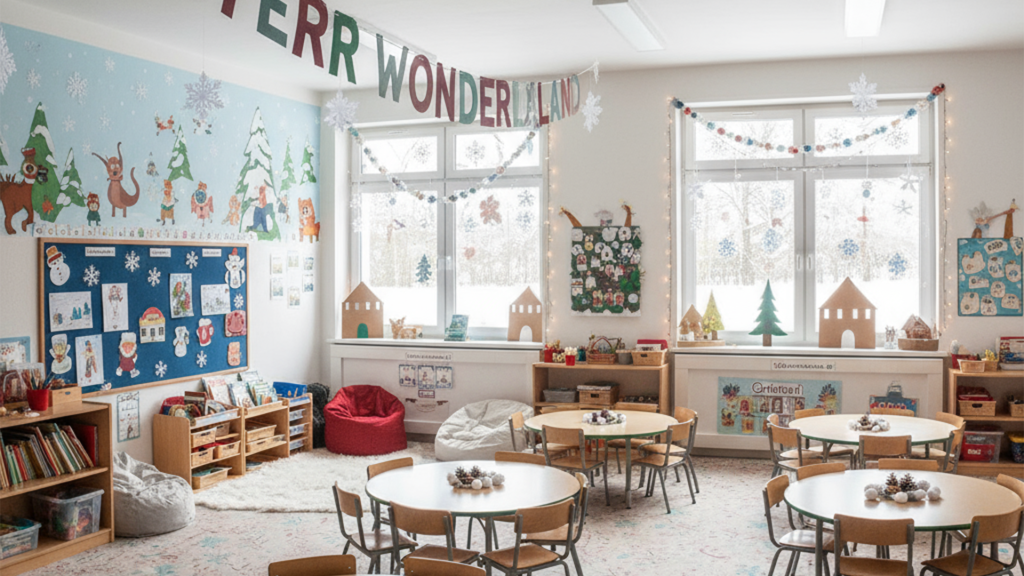
The 3 Year Old Preschool Daily Schedule
Three-year-olds are just beginning to develop social skills and longer attention spans. Their 3 year old preschool daily schedule should focus on frequent transitions and sensory-heavy play.
- 08:30 – 09:00: Arrival and Free Exploration (Soft wooden puzzles).
- 09:00 – 09:15: Morning Circle (Short songs and greetings).
- 09:15 – 10:00: Guided Play Centers (Role-play areas).
- 10:00 – 10:30: Wash up and Snack Time.
- 10:30 – 11:15: Outdoor Gross Motor Play.
- 11:15 – 11:45: Story Time and Music.
- 11:45 – 12:30: Lunch.
- 12:30 – 14:00: Nap/Quiet Rest.
For the “Guided Play” block, our Wooden Role Play Sets are designed to encourage the exact social scripting 3-year-olds need to practice.
The 4 Year Old Preschool Daily Schedule
At four years old, children can handle slightly longer periods of focus. The 4 year old preschool daily schedule introduces more structured “learning blocks” while maintaining a play-based approach.
| Time | Activity | Focus |
| 08:30 – 09:00 | Arrival & Sign-in | Fine Motor Skills |
| 09:00 – 09:30 | Morning Meeting | Social Connection |
| 09:30 – 10:45 | Preschool Daily Schedule Examples (Centers) | Math, Science, Art |
| 10:45 – 11:15 | Outdoor Play | Physical Health |
| 11:15 – 11:45 | Group Activity | Music/Movement |
| 11:45 – 12:30 | Lunch | Nutrition & Manners |
For distributors, note that the 09:30 block is the longest. This is where schools require heavy-duty resources like our Classroom Building Block Sets to keep engagement high for 75 minutes.
The 5 Year Old (Pre-K) Daily Schedule
The 5 year old preschool daily schedule is often called “Pre-K.” It bridges the gap to kindergarten with more complex projects and independence.
- 08:30 – 09:00: Independent Morning Work.
- 09:00 – 09:30: Community Meeting (Calendar, Weather).
- 09:30 – 11:00: Project-Based Learning (Engineering with blocks, Science experiments).
- 11:00 – 11:45: Organized Outdoor Games.
- 11:45 – 12:30: Lunch.
- 12:30 – 13:15: Quiet Reading/Journaling (No nap).
Incorporating a preschool full day schedule for this age group often requires “Quiet Time” furniture that is comfortable but supports posture, such as our ergonomic wooden chairs.
Key Components of a Successful Day
Every sample preschool schedule shares these core elements. Understanding them helps you select the right products for your facility.
1. Center Time (Free Choice)
This is the heart of the preschool schedule at home or in school. It requires “loose parts”—materials that can be used in many ways.
- Recommended: Montessori Educational Toys. These wooden tools allow for self-correction, perfect for independent learning blocks.
2. Circle Time
A daily schedule for preschool classroom with pictures often starts here. It builds community.
- External Resource: Learn more about effective circle times from Head Start’s Early Childhood Learning & Knowledge Center.
3. Transitions
Moving from play to lunch can be chaotic. Experts recommend using auditory signals (like a wooden chime) or visual timers to help.

Optimizing Transitions with Visuals
A daily schedule for preschool classroom with pictures is non-negotiable. Young children cannot read clocks, but they can read icons.
Using a visual schedule reduces behavior issues because children know exactly what comes next. You can create a preschool daily schedule printable that uses photos of your actual classroom toys. For example, use a photo of our Wooden Sorting Trays to represent “Math Time.”
- Tip: If you are a parent looking for a preschool daily schedule at home, simply simplify the blocks: Morning Play, Snack, Outdoor, Lunch, Rest, Afternoon Art.
Final Thoughts
A preschool daily schedule is more than a list of times; it is the framework for a child’s growth. By filling that schedule with high-quality, safe, and engaging wooden materials, you ensure that every minute of the day contributes to their development.
Ready to equip your classroom for success? Browse our Full Catalog of Wooden Educational Toys to find the perfect materials for every block of your schedule.
