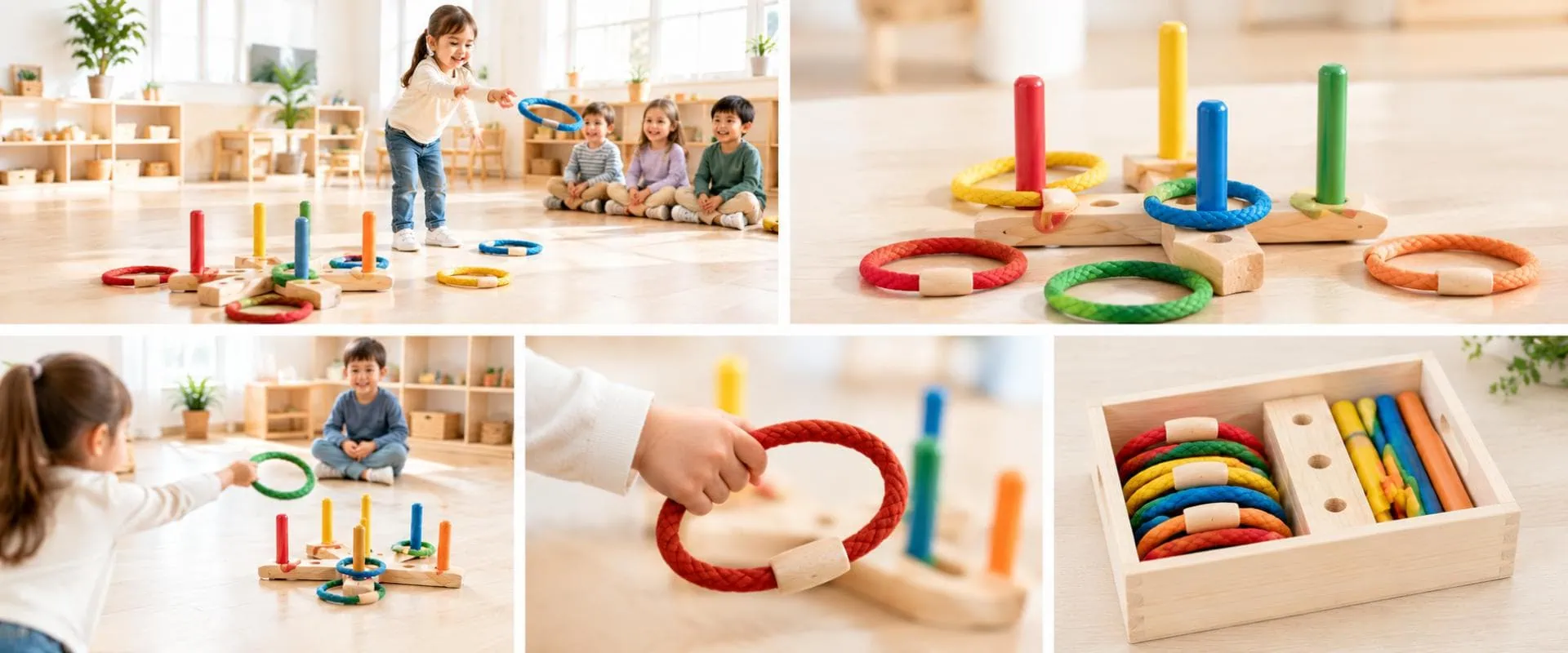
Wooden toys for kids are widely used in preschools, childcare centres, Montessori classrooms and commercial play environments. Their natural appearance, tactile surfaces and long service life make them an attractive choice for education providers, distributors and project buyers.
However, choosing the right wooden toys involves more than comparing colours and prices. Buyers must also consider age suitability, materials, structural stability, finishes, testing requirements, maintenance and the supplier’s ability to support long-term projects.
Since 2008, Sing2sky has worked with educational institutions, distributors and international partners to develop wooden educational toys and early learning equipment. In this guide, we explain the main product types, essential safety considerations and practical steps for selecting a suitable manufacturing partner.
Why Are Wooden Toys a Valuable Long-Term Investment?
Well-designed wooden toys can provide excellent durability in classrooms and other high-use environments. Solid timber and quality engineered wood can withstand repeated handling when the product is correctly designed, manufactured and maintained.
Wood also provides a warm and natural sensory experience. Differences in weight, texture, grain and shape give children opportunities to explore materials through touch and movement. This makes wooden resources particularly suitable for Montessori-inspired environments, construction play, loose-parts activities and open-ended learning.
Unlike toys with highly prescribed functions, many wooden play materials can be used in different ways. Blocks may become buildings, roads, bridges or imaginative landscapes. This flexibility allows one resource to support spatial reasoning, creativity, communication and collaborative problem-solving across different age groups.

For distributors and project buyers, product durability can also reduce replacement frequency and after-sales problems. Consistent quality, suitable packaging and reliable spare-part support help protect margins and build stronger relationships with schools and other end users. You can also browse our product catalogues for distributors and educational projects.
Popular Types of Wooden Toys for Kids
The most suitable product mix depends on the children’s ages, the available space and the educational goals of the project. The following categories are commonly selected by preschools, childcare centres, distributors and learning-space designers.
Wooden Educational Toys and Skill-Building Resources
Wooden puzzles, sorting toys, counting resources and construction sets are important components of many early learning environments. Depending on their design, these products can help children practise matching, sequencing, fine-motor control, spatial awareness and early mathematical thinking.
When evaluating this category, buyers should examine the size and weight of the pieces, the accuracy of connections, the smoothness of the edges and whether the activities are appropriate for the intended age group. Components designed for younger children should also be assessed carefully for small-part risks.
Wooden Climbing Equipment for Active Play
Wooden climbing equipment for children, including triangular climbing frames, climbing arches, ramps and balance elements, can support active indoor play when it is selected and supervised appropriately.
These resources encourage children to practise balance, coordination, body awareness and controlled movement. For educational and commercial settings, structural stability is especially important. Buyers should check the recommended age range, maximum user load, connection points, anti-slip details, floor requirements and the amount of safety space needed around the equipment.

Wooden Toys for Gardens and Outdoor Learning Spaces
Outdoor wooden play resources can extend learning beyond the classroom. Popular options include mud kitchens, playhouses, planting stations, sand-and-water equipment, outdoor blocks and pretend-play structures.
Outdoor products require different material and construction decisions from indoor toys. Buyers should confirm how the timber has been prepared, which finish is used, how water can drain from the structure and what maintenance is required in the local climate. Products exposed to rain, sunlight or high humidity should be inspected regularly and maintained according to the supplier’s instructions.
Explore an example from our outdoor range: Outdoor Natural Planting Area Kit.
Construction, Loose-Parts and Pretend-Play Systems
Large construction blocks, mechanical building systems and carefully selected loose parts allow children to test ideas through hands-on play. Kitchens, shops, workbenches and role-play furniture can also encourage communication, cooperation and imaginative storytelling.
For schools and distributors, modular product systems can be especially valuable because they allow additional components to be introduced over time. A coordinated system is generally easier to demonstrate, merchandise and expand than a collection of unrelated products.
Safety and Quality: What Should Buyers Check?
A wooden toy should not be evaluated by appearance alone. Buyers should review the complete product, including its materials, dimensions, fasteners, finishes, packaging, instructions and intended use.
- Materials and construction: Confirm the type of timber or board used and whether it is suitable for the product’s intended environment. Structural products require particular attention to joints, fasteners and load-bearing areas.
- Smooth surfaces and rounded edges: Accessible surfaces should be properly sanded and finished. Corners, openings and connection points should be assessed for foreseeable risks during use.
- Suitable coatings: Ask the supplier which paint, stain or clear finish is used. Sing2sky uses child-appropriate water-based finishes for relevant products, subject to the product specification and market requirements.
- Age and use recommendations: Products should clearly state the intended age range, installation requirements and whether adult supervision is required.
- Testing and documentation: Request test reports and supporting documents relevant to the destination market and product type. Requirements may differ between the European Union, the United States and other markets.
- Quality-control process: Ask how the factory checks incoming materials, dimensions, assembly, surface finishing, packaging and final products before shipment.
Safety is not created by one certificate alone. It depends on suitable materials, thoughtful design, controlled production, correct installation and responsible use.
How Do You Choose the Right Wooden Toy Supplier?
A reliable supplier should do more than provide a price list. For a school project, distribution business or private-label programme, consider the supplier’s manufacturing capability, communication process and ability to maintain consistent specifications across repeat orders.
- Relevant manufacturing experience: Ask whether the supplier has experience with educational products and institutional-use equipment rather than only consumer toys.
- Product documentation: Confirm what specifications, assembly instructions, packaging information and test documents can be supplied.
- OEM and ODM capability: Determine whether the factory can adjust colours, dimensions, configurations, branding and packaging for your market.
- Sampling and approval: For customised products, confirm the sample-development process and approve the final specification before mass production.
- Production quality control: Ask how product consistency is maintained from the first sample to the final shipment.
- Packaging and logistics support: Commercial buyers should confirm carton specifications, loading efficiency, spare parts and shipping documentation before placing an order.
- Long-term cooperation: A suitable partner should be able to support repeat orders, product updates and the development of coordinated collections as your market grows.
Sing2sky supports distributors, importers, educational groups and project partners with OEM/ODM development, private-label options, product configuration, packaging and visual marketing materials.

Questions to Ask Before Requesting a Quotation
Preparing the following information will help the supplier recommend a more suitable product configuration and provide a more accurate quotation:
- What age group will use the products?
- Will the products be used indoors or outdoors?
- Are you purchasing for one project, distribution or private-label resale?
- Which safety standards or import documents are required in your market?
- Do you require custom colours, branding, packaging or product dimensions?
- What is the estimated order quantity or shipment volume?
- What is your preferred delivery destination and trade term?
Conclusion
Choosing wooden toys for kids is not simply a question of selecting an attractive design. A successful purchase should balance educational value, age suitability, durability, safety, maintenance, documentation and long-term supply capability.
Whether you are planning a preschool, developing a private-label range or expanding a distribution business, working with an experienced manufacturer can help you reduce purchasing risks and build a more coherent product collection.