

Anji Play is a child-led early childhood education approach that originated in Anji County, Zhejiang Province, China. It places extended, self-determined play at the center of children’s daily learning experiences.
Large blocks, planks, ladders, barrels, ropes, wheels, clay, sand, water, and other open-ended materials are among its most visible features. However, Anji Play is not simply a collection of outdoor equipment. Its deeper foundation is a relationship of trust between children, educators, families, materials, and the learning environment.
The approach is organized around five interconnected principles: Love, Risk, Joy, Engagement, and Reflection. Together, these principles create the conditions for what Anji Play describes as “True Play.”
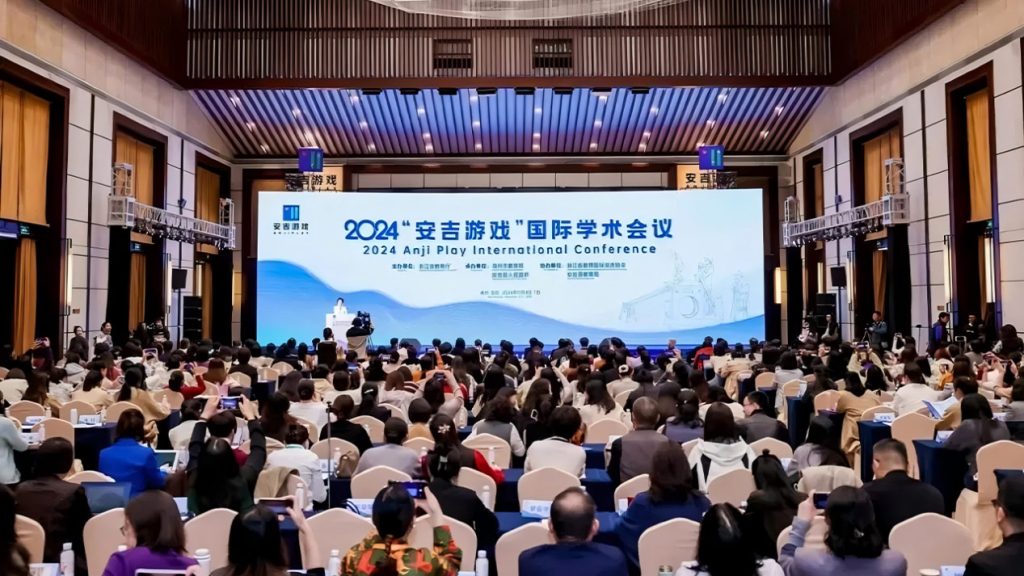
What Is Anji Play?
Anji Play is an early childhood education approach developed through the public kindergarten system of Anji County. It is closely associated with educator Cheng Xueqin and the county’s long-term effort to move from adult-directed activities toward authentic, self-determined play.
During True Play, children make meaningful decisions about what they will do, which materials they will use, where they will play, how they will approach a challenge, and who will participate with them.
Educators remain present and responsible for the environment, but they do not automatically demonstrate the “correct” way to use every material or determine the outcome of the activity. Instead, they observe closely, document children’s actions, assess conditions, and support reflection after play.
In 2020, the World Economic Forum included Anji Play in its Schools of the Future report as one of 16 examples illustrating important characteristics of future-ready education. It was presented as a child-led curriculum in which learning takes place through play.
What Does “True Play” Mean?
True Play refers to play that is genuinely initiated and directed by children. It is not an adult-designed lesson made to look like play, and it does not require every child to produce the same result.
Children may construct a tower, redesign a pathway, transport materials, create imaginary roles, test a ramp, negotiate rules, or abandon one idea and begin another. The purpose is not to guide them toward a predetermined product. The play process itself is the primary experience.
- Children make consequential choices.
- The result is not predetermined by the educator.
- Materials can be moved, combined, and transformed.
- Children have sufficient time to develop complex play.
- Educators observe before deciding whether intervention is necessary.
- Children revisit and explain their experiences after playing.
The 5 Principles of Anji Play
1. Love
In Anji Play, love is more than warmth or affection. It is reflected in reliable relationships and environments where children feel trusted, respected, heard, and physically and emotionally secure.
When adults believe children are capable, they can give them meaningful responsibility instead of controlling every action. This does not mean withdrawing care or supervision. It means creating stable conditions in which children can make decisions and reveal their thinking.
Love may be visible when educators:
- Listen carefully to children’s explanations.
- Respect children’s ideas without immediately correcting them.
- Prepare dependable routines and usable environments.
- Recognize different abilities, experiences, and ways of participating.
- Trust children while maintaining appropriate safeguarding responsibilities.
2. Risk
Risk is the experience of acting when the outcome is uncertain. Children may wonder whether a structure will remain stable, whether a plank will reach, how high they can climb, or how quickly an object will roll down a slope.
This is different from exposing children to uncontrolled hazards. A risk is something a child can notice, consider, and respond to. A hazard is a source of harm that the child may not be able to recognize or manage.
Educators and program managers remain responsible for inspecting equipment, maintaining the environment, considering age and ability, following applicable regulations, and removing unacceptable hazards. The goal is thoughtful risk management—not the elimination of every challenge and not unrestricted danger.

3. Joy
Joy appears when children experience freedom, discovery, surprise, humor, movement, imagination, and connection with others. It is not something an educator can produce simply by making an activity colorful or entertaining.
In True Play, joy often emerges because the activity belongs to the children. They can change direction, repeat an experience, develop an unusual idea, and share discoveries with peers.
Joy may be expressed through laughter and excitement, but it may also appear as quiet satisfaction, concentration, or a child’s desire to return to the same project the following day.
4. Engagement
Engagement is the deep physical, emotional, social, and intellectual involvement that occurs when children are absorbed in play that matters to them.
A deeply engaged child may repeat an action, revise a plan, coordinate with friends, examine why something failed, or continue working through difficulty. From the outside, the activity may look simple, but the child may be managing balance, spatial relationships, communication, planning, and changing conditions at the same time.
Engagement requires sufficient time. When play is constantly interrupted or replaced by short adult-led tasks, children may not have enough opportunity to build complex ideas.

5. Reflection
Reflection distinguishes Anji Play from an approach that simply provides outdoor free time. Educators document children’s play through observation notes, photographs, or video, subject to the program’s privacy and safeguarding policies.
Children can then revisit what happened, draw their play experiences, tell play stories, discuss recorded moments, and explain their decisions.
Reflection may help make children’s thinking visible through questions such as:
- What were you trying to build?
- What happened when the structure moved?
- How did you and your friends make the decision?
- What surprised you?
- What would you like to try next?
The purpose is not for adults to explain the “lesson” hidden in the play. It is to give children space to interpret, represent, and communicate their own experiences.
How the Five Principles Work Together
| Principle | Condition it creates | What educators may observe |
|---|---|---|
| Love | Trust, security, respect, and reliable relationships | Children expressing ideas and making meaningful choices |
| Risk | Uncertainty, challenge, prediction, and experimentation | Children assessing, attempting, adjusting, and trying again |
| Joy | Ownership, discovery, freedom, and connection | Excitement, satisfaction, humor, and a desire to continue |
| Engagement | Time and space for sustained involvement | Concentration, collaboration, repetition, and complex play |
| Reflection | Opportunities to revisit and represent experience | Drawing, storytelling, discussion, planning, and explanation |
The Role of Open-Ended Materials
Anji Play environments are widely recognized for their large-scale, movable materials. These may include blocks, planks, ladders, barrels, carts, ropes, fabric, wheels, clay, sand, and water.
The educational value does not come from wood or any other material alone. It comes from the possibilities children have to move, combine, adapt, and reinterpret the materials.
| Material type | Possible child-directed use | Planning consideration |
|---|---|---|
| Large blocks | Walls, platforms, towers, stages, and imaginary spaces | Weight, dimensions, stability, storage, and lifting practices |
| Planks and boards | Bridges, ramps, pathways, levers, and connections | Surface condition, support points, height, and load |
| Ladders and climbing components | Climbing routes, structures, and connections | Fall zones, inspection, supervision, and applicable standards |
| Barrels, wheels, and cylinders | Rolling, transporting, balancing, and construction | Entrapment, uncontrolled movement, surface slope, and weight |
| Ropes and fabric | Connecting, pulling, enclosing, decorating, and role play | Length, entanglement risk, anchoring, and condition |
| Sand, water, mud, and clay | Shaping, transporting, mixing, testing, and sensory exploration | Hygiene, drainage, weather, clothing, and maintenance |
Programs do not need to introduce every material at once. A smaller, well-maintained collection can provide meaningful possibilities when children have enough time and freedom to explore it.
What Is the Educator’s Role?
The phrase “step back” is sometimes misunderstood as meaning that educators do nothing. In practice, observation requires sustained attention and professional judgment.
Educators may be responsible for:
- Preparing and inspecting the play environment.
- Ensuring children have sufficient uninterrupted time.
- Observing without unnecessarily controlling the play.
- Distinguishing manageable risk from unacceptable hazards.
- Documenting children’s actions, language, strategies, and relationships.
- Facilitating reflection without imposing an adult interpretation.
- Using observations to adjust materials and environmental conditions.
- Communicating the value and processes of play to families.
Intervention may still be necessary when there is an immediate danger, when a child needs assistance, or when safeguarding requirements demand action. Child agency does not remove adult responsibility.
Anji Play Is More Than Outdoor Equipment
A school can purchase blocks, ladders, planks, and barrels without implementing Anji Play. Equipment alone cannot create Love, Risk, Joy, Engagement, or Reflection.
Meaningful implementation also involves:
- A shared understanding of children as capable learners.
- Time for sustained self-determined play.
- Professional development for educators.
- Observation and documentation practices.
- Processes for play stories and child-led reflection.
- Risk-benefit assessment and equipment inspection.
- Family communication and organizational support.
- Ongoing evaluation of the local environment and context.
Programs interested in adopting the named Anji Play approach should consult official Anji Play resources and seek appropriate training. Schools may also learn from its child-led principles without representing their local program as an official Anji Play implementation.

Planning an Open-Ended Outdoor Play Environment
Before purchasing equipment, education groups and project planners should evaluate how the complete environment will function.
- Define the educational purpose. Decide whether the goal is an official Anji Play implementation, a broader child-led outdoor play program, or a local curriculum informed by similar principles.
- Assess the site. Review available space, terrain, drainage, weather, circulation, storage, access, and visibility.
- Plan for quantities. Open-ended play requires enough compatible materials for children to build and collaborate, not only isolated demonstration pieces.
- Review safety requirements. Identify the regulations, standards, inspection procedures, fall-zone requirements, and documentation applicable to the project location.
- Prepare storage and maintenance. Large movable materials require practical systems for drying, inspection, inventory, transport, and replacement.
- Develop staff practice. Train educators in observation, documentation, reflection, risk-benefit thinking, and appropriate intervention.
- Introduce materials gradually. Observe how children use each component before expanding the collection or increasing complexity.
Selecting Materials for Child-Led Outdoor Play
Distributors, education groups, and procurement teams should evaluate complete products rather than assuming that every wooden or “natural” item is automatically suitable.
- Confirm the intended age range and use environment.
- Review dimensions, weight, stability, and potential combinations.
- Inspect surfaces, edges, joints, fasteners, finishes, and detachable components.
- Ask for documentation applicable to the destination market and exact product.
- Consider how children and educators will move the components.
- Plan for inspection, maintenance, cleaning, drying, and storage.
- Evaluate whether replacement components are available.
- Test samples before confirming a large or customized project.
Material choice should be based on the intended experience, product design, climate, maintenance capacity, and applicable requirements—not on a general assumption that one material is always superior to another.
Frequently Asked Questions
What are the five principles of Anji Play?
The five interconnected principles are Love, Risk, Joy, Engagement, and Reflection. Autonomy, open-ended materials, outdoor environments, and teacher observation are important practices, but they do not replace the official five principles.
Is Anji Play the same as free play?
It includes self-determined play, but the overall approach also includes intentionally prepared environments, educator observation, documentation, child expression, and reflection after play.
Does Anji Play require wooden equipment?
Wood is frequently used, especially for large blocks, planks, and climbing components. However, the underlying principle is open-ended, movable, combinable material. Programs should evaluate each material and product according to its purpose, design, safety, durability, and local requirements.
Does the teacher intervene during Anji Play?
Educators generally observe before intervening and avoid directing the outcome of children’s play. However, they retain responsibility for safeguarding, environmental preparation, hazard management, documentation, and appropriate support.
Can a school create Anji Play by purchasing equipment?
No. Materials are only one element. Implementation also requires time, educator practice, observation, reflection, family communication, organizational commitment, and an understanding of the complete educational philosophy.
Can other play-based programs learn from Anji Play?
Yes. Programs can consider its emphasis on trust, child agency, open-ended materials, sustained engagement, thoughtful challenge, observation, and reflection. They should clearly describe their own model and avoid claiming official affiliation without authorization.
Supporting Child-Led Outdoor Play Projects
Anji Play offers an important reminder: children’s learning cannot be reduced to the features of a product. Materials become meaningful when children have the time, freedom, relationships, and environment required to transform them.
Since 2008, Sing2sky has worked with distributors, importers, education groups, OEM brands, and project partners on wooden educational toys, large construction materials, movable climbing equipment, sensory products, and outdoor play systems.
We can support product selection, dimensional planning, material options, OEM development, packaging, sample review, and project-specific documentation. Our products should be evaluated according to the intended project and destination market and are not presented as official Anji Play products unless explicitly stated otherwise.







