

Counting toys for preschool help make number and quantity visible and touchable. Children can move one object for each number word, compare collections, create patterns, divide a group into smaller parts, and use objects to represent simple mathematical stories.
However, owning a set of counters does not automatically improve mathematical understanding. The educational value depends on the concepts being explored, the questions educators ask, the children’s current understanding, and whether the materials are safe and manageable for the group.
This guide presents seven hands-on activities, explains the mathematical ideas behind them, and provides selection and procurement guidance for preschools, education groups, distributors, and other professional buyers.

What Are Counting Toys?
Counting toys are manipulatives children can move, group, order, compare, or match while exploring early mathematics. They may include:
- large wooden counters;
- counting beads and bead frames;
- number and quantity boards;
- sorting bowls or trays;
- stacking rings or discs;
- peg-counting boards;
- dominoes and dot cards;
- animal, fruit, vehicle, or nature-themed counters;
- number-path games;
- shape and pattern sets.
Counting toys are not limited to practicing number names. The same materials can support sorting, matching, comparison, patterning, measurement, spatial reasoning, addition, subtraction, and mathematical language.
Which Early Math Concepts Can Counting Toys Support?
Stable Number Order
Children begin to learn that number words follow a consistent order. Reciting that sequence is useful, but it does not by itself demonstrate that a child understands quantity.
One-to-One Correspondence
When counting a collection, the child pairs one number word with one object. Moving each object into a tray or touching it while counting can make this relationship easier to observe.
Cardinality
Cardinality means understanding that the last number spoken when counting tells how many objects are in the complete set. After counting, educators can ask, “So how many are there altogether?”
Comparing Quantities
Children can compare two collections and discuss which has more, fewer, or the same number. Matching objects in pairs can help children compare without relying only on visual impressions.
Composition and Decomposition
A quantity can be separated into smaller groups and recombined. For example, five counters may be arranged as two and three or as four and one. These experiences can contribute to later understanding of addition and subtraction.
Patterning and Classification
Children can sort objects according to attributes and create repeating or growing patterns. These activities invite them to identify relationships and explain their decisions.
The Head Start preschool mathematics guidance includes coordinating verbal counting with objects, understanding quantity, comparing numbers, and using manipulatives to represent joining and separating problems.
7 Hands-On Counting Activities for Preschool
1. Count and Move
Place a small collection of suitable counters beside an empty tray. Ask the child to move one object into the tray for each number word spoken.
This physical action can make it easier to see whether each object has been counted once. Afterward, ask:
- How many did you move?
- How could we check?
- Will there still be the same number if we arrange them differently?
Vary the size of the collection according to the child’s current understanding rather than requiring every child of the same age to count to the same target.
2. Number-to-Quantity Match
Provide numeral cards and a collection of counters. Children select a card and build a set containing the corresponding quantity.
For children who do not yet recognize numerals, begin with dot cards, fingers, or picture quantities. The objective is to connect different representations of the same amount—not simply memorize printed symbols.
3. Which Group Has More?
Create two collections and invite children to compare them. The groups should sometimes be arranged differently so children cannot rely only on the length or visual density of the rows.
Useful questions include:
- Which group has more?
- How do you know?
- Can you match the objects in pairs?
- What could we change to make the groups equal?
4. Build and Extend a Pattern
Use counters with two or more visible attributes, such as color, shape, size, or image. Begin a simple repeating pattern and invite children to continue it.
Children can then create their own patterns and ask another child to predict what comes next. Educators should encourage children to describe the repeating unit rather than focusing only on the final answer.
5. Make the Same Number in Different Ways
Choose a manageable quantity and invite children to divide it between two bowls, sections, or characters.
For example, six objects might be arranged as:
- one and five;
- two and four;
- three and three.
Recombine the groups each time and count the total. A short story—such as sharing fruit between two market stalls—can make the mathematical relationship meaningful.
6. Pretend Shop or Restaurant
Place counting materials in a pretend market, restaurant, bakery, garden center, or pet shop. Children can fill orders such as “three apples,” “two bowls,” or “five animal figures.”
As children develop confidence, introduce simple problems:
- We have four plates and need one more. How many will we have?
- There are five animals, but two have gone home. How many remain?
- Can you give each customer one cup?
The purpose is to model quantities with objects and language, not to turn pretend play into a formal test.
7. Create a Number Path Game
Arrange a short sequence of numbered spaces. Children move one large game piece one space at a time according to a dot card, spinner, or another approved randomizer.
This can support counting movements, recognizing quantities, comparing positions, and using language such as before, after, closer, farther, first, and next.
Avoid using very small dice with children for whom they present a choking risk. Use large, age-appropriate components and follow the product’s stated age range.
How to Adapt Counting Activities
Activities should be adapted according to what educators observe rather than a rigid age chart.
| Observed Understanding | Possible Next Experience |
|---|---|
| Recites number words but skips or recounts objects | Move each object into a separate space while counting |
| Counts accurately but does not answer “how many?” | Repeat the last number and discuss the total quantity |
| Recognizes small quantities without counting | Match dot patterns, fingers, numerals, and object sets |
| Compares only by row length | Pair objects or rearrange equal sets differently |
| Combines two small groups | Model joining and separating through short stories |
| Creates a repeating pattern | Identify the repeating unit or create a pattern for a peer |
Children may demonstrate mathematical understanding through objects, fingers, spoken language, gestures, drawings, signs, or home-language number words. Providing several ways to participate is more useful than assigning children to fixed “learning styles.”
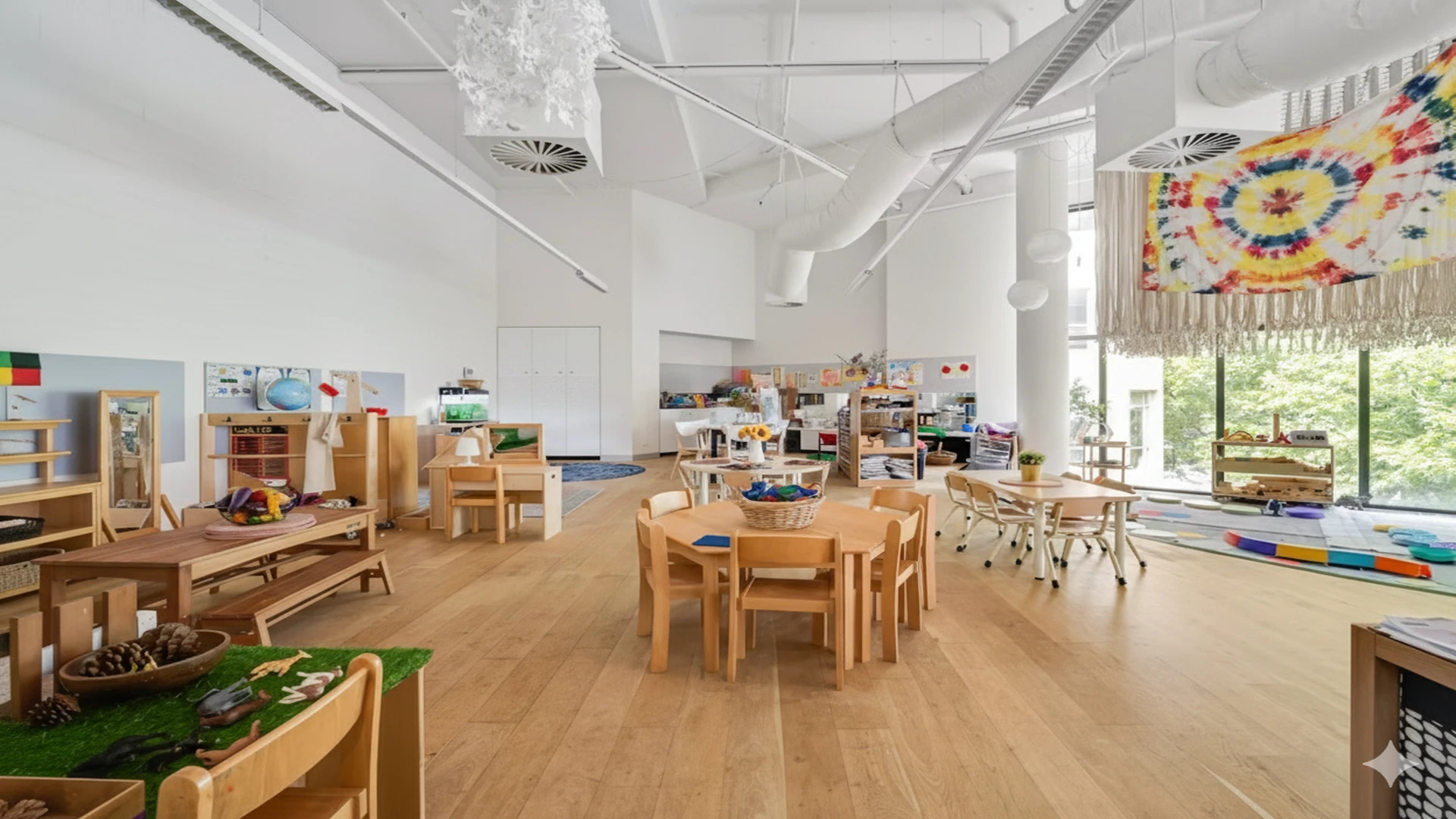
How to Organize a Preschool Math Center
The number of sets, children per group, and length of each activity should be determined by the classroom, materials, educators, and children. There is no universal requirement for six stations, five children per group, or a twenty-minute rotation.
A manageable math center generally includes:
- a clearly defined working area;
- enough materials for children to manipulate rather than only watch;
- labeled storage that makes missing pieces easier to identify;
- large or clearly visible demonstration materials when required;
- a limited number of choices presented at one time;
- separate storage for adult-controlled or age-restricted materials;
- visual cleanup cues;
- space for children to explain or display their arrangements.
Math manipulatives can also be placed in dramatic play, block, art, science, and outdoor areas. Counting becomes more meaningful when it helps children solve a problem within another activity.
How to Choose Counting Toys for Preschool
1. Match the Material to a Mathematical Purpose
Before purchasing a set, identify what children can do with it. A useful material should support one or more clear concepts, such as:
- one-to-one correspondence;
- number and quantity matching;
- sorting and classification;
- comparison;
- sequencing and patterning;
- composition and decomposition;
- informal measurement;
- spatial or geometric relationships.
A highly decorative toy with only one correct response may offer fewer opportunities than a simpler set that supports several types of mathematical exploration.
2. Check Age Grading and Component Size
Small counters, beads, pegs, balls, coins, dice, and detachable parts may create choking, aspiration, or ingestion risks. Follow the product’s age grading and the applicable small-parts requirements for the target market.
Do not assume a product is appropriate for a mixed-age classroom simply because older preschool children can use it. Materials intended for older children must be stored securely when younger children can enter the same space.
3. Inspect Magnets and Strings
If the product contains magnets, confirm that they are securely enclosed and that the product meets the applicable requirements. Remove any component with a cracked casing, loose magnet, or missing part immediately.
Counting beads mounted on cords, wires, or frames should be assessed for accessible cord length, attachment strength, exposed wire ends, pinch points, and bead release.
4. Evaluate Material and Construction
For wooden counting toys, review:
- wood or panel material;
- smoothness and accessible edges;
- cracks, splinters, knots, and delamination;
- coating and printing specifications;
- color transfer and saliva resistance where relevant;
- joint and fastener security;
- cleaning compatibility;
- replacement-part availability.
“Natural,” “non-toxic,” “eco-friendly,” or “premium wood” are marketing descriptions rather than complete technical evidence. Request specifications and relevant test documentation.

5. Compare Complete Sets, Not Piece Counts Alone
A large advertised piece count does not necessarily provide greater educational value. Check whether the set contains useful quantities of each component, whether children can use it independently or collaboratively, and whether missing pieces can be replaced.
6. Review Storage and Inventory
Counting materials are easy to mix or lose. Compartment trays, labeled containers, inventory diagrams, and replacement-part lists can reduce classroom management time.
7. Verify Market-Specific Documentation
The applicable standards depend on the product, intended age, destination country, materials, and functions. Possible requirements may include toy safety, small parts, magnets, coatings, chemicals, labeling, traceability, or packaging.
ASTM F963, CPSIA requirements, EN 71, CE marking, ISO 8124, or other national rules should not be presented as interchangeable global certifications. Buyers should request documentation matching the specific product and target market.
Using Counting Toys in Mixed-Age Groups
Mixed-age programs require more than giving each child a different task with the same product.
- Use components suitable for the youngest children who can access the area.
- Store small or advanced materials in adult-controlled locations.
- Separate activities when age, component size, or supervision needs differ.
- Provide multiple ways to represent quantity.
- Avoid positioning older children as responsible for supervising younger children.
- Observe whether peer help supports participation or takes control away from another child.
Teachers remain responsible for material selection, supervision, and adaptation. Peer collaboration can support learning, but it should not replace educator oversight.
Cleaning and Inspection
Counting toys should be inspected regularly because missing or broken components can affect both safety and educational use.
Before Use
- Check the component count where practical.
- Look for cracks, splinters, loose parts, exposed magnets, or damaged cords.
- Remove pieces with peeling coatings or sharp edges.
- Confirm that the set is appropriate for the participating children.
- Check that storage trays and boards remain stable.
After Use
- Collect materials before children leave the area.
- Clean them according to the manufacturer’s instructions.
- Allow materials to dry before closing storage containers.
- Record missing pieces or damage.
- Keep incomplete or unsafe sets out of use until corrected.
How Educators Can Observe Mathematical Understanding
Observation should focus on children’s strategies and explanations—not only whether they produce the expected answer.
- Does the child pair one number word with one object?
- Does the child know that the final number represents the total?
- Can the child create a requested quantity?
- How does the child compare two groups?
- Can the child explain a sorting rule or pattern?
- Does the child notice when the arrangement changes but the quantity remains the same?
- Can the child model a joining or separating story?
- Which representations—objects, fingers, dots, numerals, drawings, or words—does the child use?
These observations can inform the next activity without turning open-ended manipulation into constant testing.

Counting Toy Procurement Checklist
- destination country and target sales channel;
- intended age range;
- mathematical concepts supported;
- complete component list and piece dimensions;
- small-parts and magnet assessment;
- wood, panel, coating, printing, cord, and hardware specifications;
- product-specific test reports;
- age labels, warnings, instructions, and traceability information;
- classroom set quantity and number of children per working group;
- storage tray, container, or cabinet requirements;
- replacement components and spare-parts policy;
- packaging dimensions, gross weight, and loading quantity;
- OEM logo, color, manual, and packaging requirements;
- sample approval and production schedule.
For private-label projects, the approved sample should include every component, storage item, label, warning, manual, and packaging element. Changes to dimensions, material, magnet construction, coating, or intended age may require additional compliance review or testing.
Frequently Asked Questions
What are the best counting toys for preschool?
The best choice depends on the mathematical purpose, intended age, component size, classroom organization, construction, cleanability, storage, and relevant safety documentation. A versatile set that supports counting, sorting, comparison, and patterning may offer more value than a product with only one prescribed activity.
How many counting toy sets does a classroom need?
There is no universal quantity. Calculate the number of children expected at the center, the number who can use one set meaningfully, the number of simultaneous groups, available storage, and the replacement plan.
Are wooden counters better than plastic counters?
Neither material is automatically better. Compare the complete product, including durability, dimensions, finish, weight, cleaning, environmental exposure, construction, documentation, and intended use.
Can children learn counting without specialized toys?
Yes. Children can count fingers, steps, plates, blocks, natural objects, movements, and everyday classroom materials. Specialized products can improve organization and provide consistent representations, but they are not the only path to early mathematics.
Should preschool children complete timed math activities?
Speed is generally not the main objective of early counting activities. Give children time to coordinate number words with objects, check their work, explain their thinking, and try another strategy.
Make Mathematics Visible and Meaningful
Counting toys are most useful when children can use them to solve meaningful problems rather than simply repeat number words. Moving, grouping, comparing, sharing, and rearranging objects can help educators see how children understand quantity and relationships.
Begin with a clear mathematical purpose, select age-appropriate materials, use open questions, observe children’s strategies, and adapt the next experience accordingly.
Sing2sky has manufactured wooden educational products since 2008 and supports distributors, importers, education groups, OEM brands, and project partners. Contact Sing2sky with your destination market, intended age range, required quantity, product specifications, packaging, and compliance requirements.
Final age grading, component size, warnings, supervision, testing, and compliance claims must follow the documentation for the specific product supplied and the requirements of the destination market.







