

Educational supplies help turn classroom plans into practical learning experiences. From wooden blocks and sorting materials to pretend-play props and accessible storage, a well-chosen collection gives children opportunities to explore, communicate, create, and work independently.
For educational distributors, importers, education groups, and project suppliers, choosing the right products requires more than comparing catalog prices. Age suitability, teaching approach, product documentation, maintenance, and delivery planning all influence whether a collection works well in its intended setting.
This guide explains seven practical ways to select educational supplies for preschool and early learning environments, with useful considerations for classroom projects and wholesale purchasing.
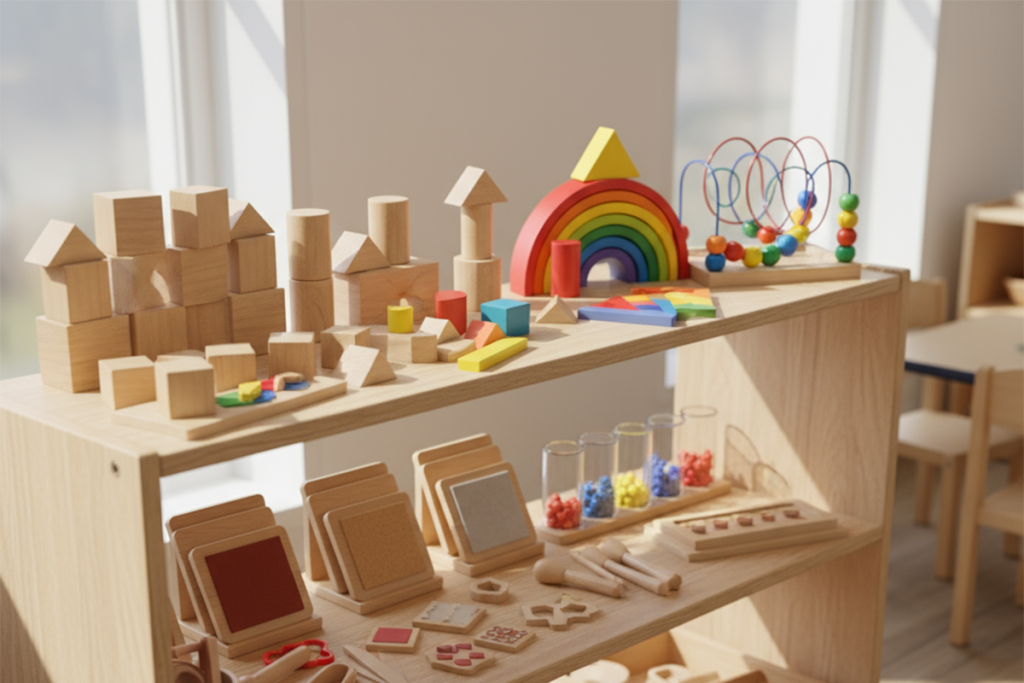
1. Match Educational Supplies to the Learners and Setting
Begin with the children who will use the materials. A toddler room, a preschool classroom, and an early primary learning space need different levels of complexity, handling requirements, and supervision.
The NAEYC framework for developmentally appropriate practice emphasizes children’s development, individual characteristics, and learning context. For procurement teams, this provides a useful starting point: select products around actual users rather than a generic classroom checklist.
Before preparing a product shortlist, establish:
- Age range: Identify the intended users and check each product’s age grading.
- Learning priorities: Define the opportunities the collection should provide, such as construction, storytelling, sorting, or movement.
- Group use: Consider how many children will use each learning area at the same time.
- Available space: Account for floor activities, tabletop work, pathways, and storage.
- Accessibility: Consider grip, reach, visibility, communication, and sensory preferences.
- Operating conditions: Specify indoor or outdoor use and the setting’s cleaning requirements.
A clear project brief makes educational supplies easier to compare and reduces purchases that look attractive but do not suit the classroom.
2. Build a Balanced Collection of Preschool Educational Supplies
A useful collection supports several kinds of activity. Filling every shelf with similar puzzles or construction sets can leave gaps in language, dramatic play, or creative exploration.
Construction and Spatial Exploration
Blocks, stacking pieces, and age-appropriate connecting systems invite children to arrange, compare, balance, and redesign. Select a practical mix of basic shapes before adding specialist pieces.
Explore Sing2sky’s indoor Building Blocks when developing a construction category for your distribution range or classroom project.
Early Mathematics and Manipulatives
Sorting trays, counting materials, matching activities, puzzles, and lacing resources offer different ways to handle and organize objects. For preschool settings, prioritize concrete experiences with quantity, shape, sequence, and comparison.
More advanced place-value or fraction materials should follow the curriculum and children’s readiness rather than appear automatically in every preschool starter collection.
Language and Dramatic Play
Picture books, storytelling figures, dolls, play food, and role-play furniture create opportunities for conversation and shared narratives. Include props that reflect different families, familiar community activities, and the languages used by children.
Sensory, Creative, and Movement Materials
Texture resources, art tools, sound-making materials, and suitable movement equipment broaden the collection. Choose manageable tools and activities, with clear instructions for setup, supervision, and care.
Storage belongs in the purchasing plan too. Educational supplies are more useful when children and staff can find them, return them, and keep complete sets together.
3. Choose Materials That Fit the Educational Approach
Educational supplies should complement the program’s teaching approach. Montessori, Waldorf-inspired, and broader play-based settings may share some materials, but their selection and presentation can differ.
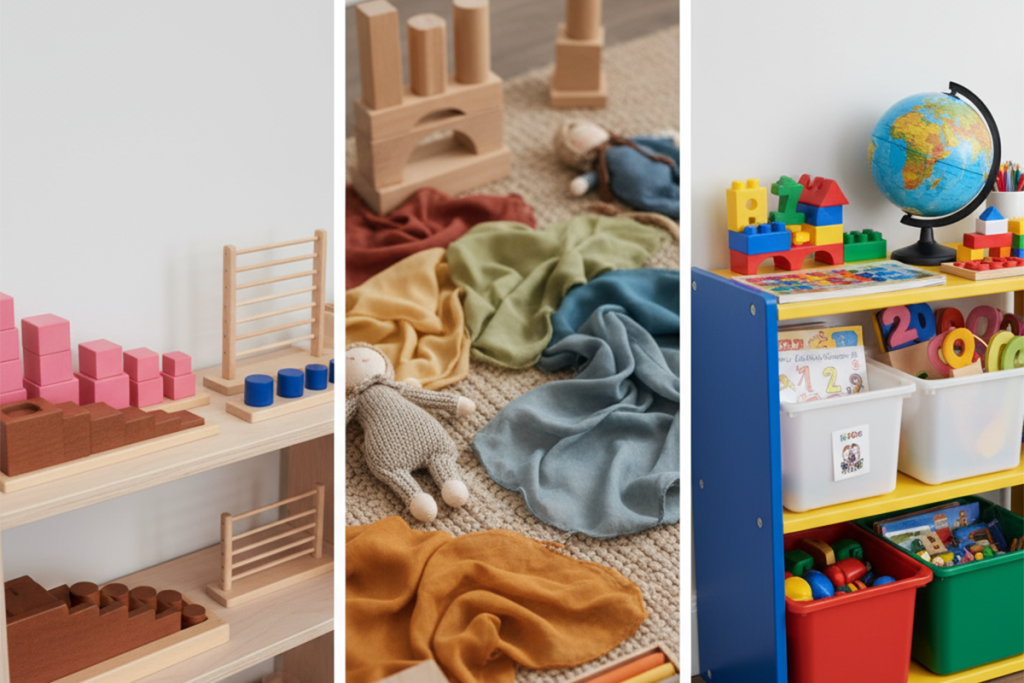
Montessori Material Selection
For Montessori projects, ask the teaching team to specify the required materials, dimensions, sequence, and presentation. Check whether the brief calls for AMI-recognized materials or a broader collection of Montessori-inspired resources.
The Association Montessori Internationale’s materials guidance identifies manufacturers working with its detailed blueprints. A Montessori-style description alone does not establish AMI recognition, and educational recognition does not replace product safety documentation.
Waldorf-Inspired and Open-Ended Collections
A Waldorf-inspired purchasing brief may include simple figures, fabrics, wooden construction pieces, and art materials. Evaluate these products for the intended users and activities rather than treating natural materials as automatic proof of suitability.
For mixed play-based programs, select educational supplies that can support several activities. Blocks might become a bridge, a market stall, or a story setting, allowing one collection to serve different classroom interests.
4. Verify Product Safety and Relevant Documentation
Safety review should match the product category and destination market. Toys, furniture, climbing equipment, and electrical learning products may have different requirements; one document should not be assumed to cover an entire catalog.
For toys intended for the United States, consult the CPSC’s toy safety business guidance. Applicable testing and certification requirements should be checked for the specific product and intended age group.
When reviewing educational supplies, request:
- Product identification that matches the quotation, sample, and supporting documents.
- Intended age range, warnings, and instructions.
- Relevant test reports and required compliance documents for the target market.
- Details of materials, coatings, and accessible components.
- Assembly, maintenance, and inspection instructions where applicable.
- Confirmation of whether customization affects the existing documentation.
Terms such as “non-toxic,” “natural,” or “child-safe” should be supported by relevant evidence. Wooden products still need assessment of their finishes, edges, joints, and parts.
Use Sing2sky’s certification information as a starting point, then confirm the documents applicable to your shortlisted models and destination market.
5. Compare Durability, Cleanability, and Everyday Use
The best educational supplies for a project are those that work reliably in daily use. Product photographs rarely show how easily a puzzle can be handled, how smoothly a drawer opens, or how long a set takes to put away.
Review samples against practical criteria:
- Handling: Can intended users grip, lift, connect, or separate the pieces comfortably?
- Construction: Are joints, edges, and moving components suitable for the intended use?
- Cleaning: Are the approved care instructions compatible with the setting’s routines?
- Storage: Does the complete set fit the planned shelves, trays, or bins?
- Maintenance: Can damaged or missing components be replaced?
- Compatibility: Will future additions work with the existing collection?
Compare wood, plastic, fabric, and other materials according to the application. A wooden block collection may suit indoor construction, while another material may better meet a particular washing or outdoor-use requirement.
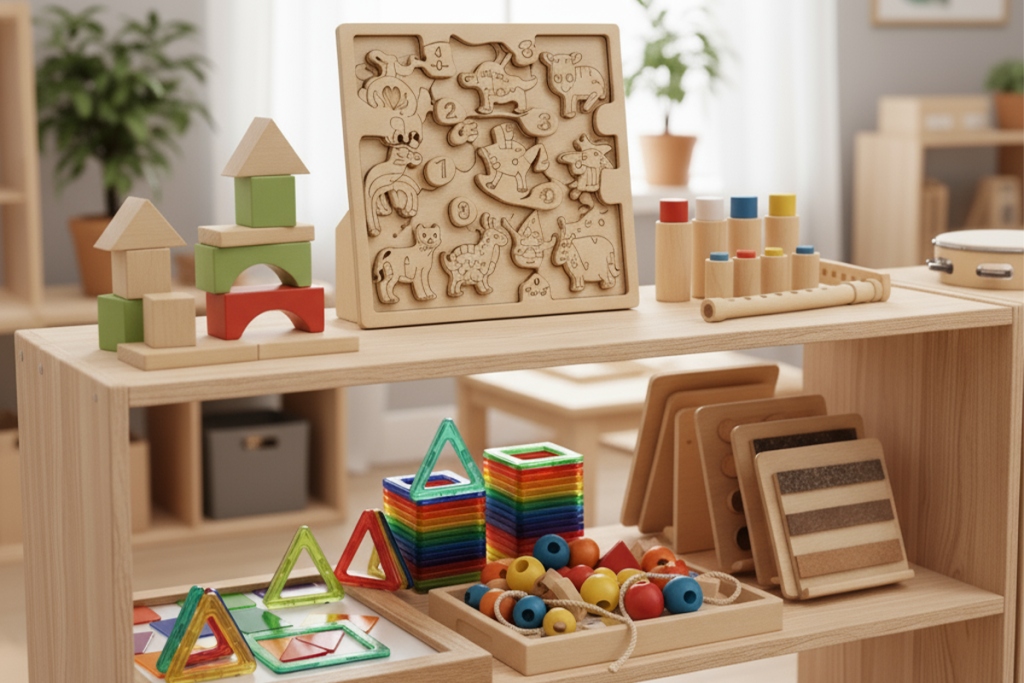
6. Evaluate the Supplier Behind the Educational Supplies
For wholesale buyers, supplier coordination affects the success of the order as much as product selection. Clear specifications and documented responsibilities help prevent misunderstandings between manufacturers, importers, distributors, and project teams.
Before confirming an order, discuss:
- Samples: Availability, cost, review process, and approval criteria.
- Order structure: Minimum quantities, mixed-product orders, and carton quantities.
- Customization: Branding, colors, dimensions, packaging, and instruction languages.
- Production: Lead times and milestones for sample approval and manufacturing.
- Shipping: Carton dimensions, weights, packing protection, and agreed delivery terms.
- Quality control: Inspection arrangements and procedures for reporting defects.
- Ongoing supply: Replacement components and repeat-order consistency.
For OEM or ODM educational supplies, approve the final specification before production. Record agreed changes so the sample, purchase order, packaging, and relevant documents describe the same product.
7. Budget for the Complete Project
A realistic budget includes more than the purchase price. Educational supplies may also require freight, duties, storage, assembly, replacement parts, and staff familiarization.
Compare quotations using the same scope. A lower unit price may offer less value if the set contains fewer useful pieces, excludes storage, or creates higher shipping costs.
Prioritize Core Materials First
Start with the resources needed for the main learning areas. Add specialist themes and extension materials after reviewing available space, classroom feedback, and actual demand.
Use a Phased Purchasing Plan
A phased plan can help distributors and education groups manage larger projects:
- Initial setup: Core construction, manipulatives, language, dramatic play, and storage resources.
- Review: Collect feedback on handling, engagement, missing components, and maintenance.
- Expansion: Add materials that address observed gaps or new curriculum needs.
- Replenishment: Plan replacements and compatible additions.
Avoid applying a universal budget percentage to every project. A new classroom, a curriculum refresh, and a distributor’s stock order have different priorities.
Frequently Asked Questions About Educational Supplies
What should a preschool starter collection include?
A practical starting point includes construction materials, puzzles and manipulatives, early counting and sorting resources, books, dramatic-play props, art tools, and suitable storage. Adjust the collection to the children’s ages, the teaching approach, and the available space.
How many educational supplies does a classroom need?
Plan around simultaneous use in each learning area rather than a universal item count. Consider group size, duplicate high-demand materials, set completeness, and storage capacity. Review usage before expanding the collection.
Are wooden materials always the best choice?
The right material depends on the activity and operating conditions. Wooden resources can suit many construction and tabletop activities, but every product should be evaluated for safety, handling, cleaning, durability, and maintenance.
Can educational supplies be customized for a distribution project?
Discuss the proposed changes with the supplier. Branding, packaging, dimensions, or component changes may affect pricing, production time, and documentation. Confirm the final specification and sample before ordering.
Plan Your Educational Supplies Range with Sing2sky
Sing2sky offers wooden educational products for hands-on learning environments. Distributors, importers, education groups, and project suppliers can explore the product collection and catalog when preparing a coordinated purchasing brief.
To discuss wholesale or OEM/ODM requirements, contact Sing2sky with your target market, intended age range, product categories, estimated quantities, and delivery schedule. These details help establish a suitable product shortlist and quotation scope.







