

A preschool garden theme can connect science, mathematics, language, creative play, and outdoor exploration through one familiar topic. Children can plant seeds, compare leaves, operate a pretend garden shop, document changes, and help care for a shared growing space.
The strongest garden projects go beyond seasonal decorations. They give children real materials to investigate, meaningful responsibilities, and repeated opportunities to revisit their observations. Activities can be adapted for an outdoor garden, a small balcony, a classroom windowsill, or a fully simulated indoor learning center.
This guide presents 12 practical preschool garden activities, ideas for arranging learning centers, a sample weekly plan, and important considerations for educational centers selecting garden equipment and classroom materials.
Why Use a Garden Theme in Preschool?
A garden creates visible changes that children can observe over time. Seeds germinate, stems grow, leaves change, soil becomes dry, and insects visit flowers. These events naturally invite questions, predictions, comparison, and conversation.
Garden experiences can support several areas of learning:
- Early science: Observing living things, weather, plant needs, growth, and seasonal change.
- Mathematics: Counting seeds, comparing quantities, measuring growth, sorting objects, and recording simple data.
- Language: Learning descriptive vocabulary, asking questions, explaining observations, and creating garden stories.
- Physical development: Pouring, digging, carrying, transferring, pinching, and using appropriately sized tools.
- Cooperation: Sharing equipment, planning tasks, caring for a common space, and discussing what to do next.
Not every activity needs a predetermined academic result. Educators can introduce useful materials, observe what interests the children, and extend their questions through conversation and further investigation.
How to Set Up Preschool Garden Learning Centers
A preschool garden theme becomes easier to manage when materials are divided into clear activity areas. Centers can operate simultaneously or be introduced gradually as the project develops.
Garden Dramatic Play Center
Turn the dramatic-play area into a garden shop, plant nursery, produce market, or landscaping station. Children can take orders, arrange products, prepare signs, count items, and negotiate roles.
- Suitable artificial flowers, wooden fruits, and wooden vegetables.
- Lightweight pots, baskets, trays, and watering cans.
- Picture menus, price cards, order forms, and reusable signs.
- Child-sized aprons, gloves, and suitable pretend-play tools.
- A counter, shelf, or low display stand.

Science and Observation Center
Provide a small number of changing natural materials rather than filling the table with unrelated decorations. Possible resources include seeds, non-toxic leaves, photographs, magnifiers, plant-life-cycle cards, and a growing specimen.
Add drawing paper, pencils, and clipboards so children can record what they notice. Their drawings do not need to be botanically accurate; the purpose is to slow down observation and create a record for later comparison.
Garden Mathematics Center
Use appropriately sized counters, flowers, vegetables, pots, or picture cards for counting, matching, sorting, patterning, and simple measurement. Keep the mathematical task connected to a recognizable garden problem, such as preparing three pots or comparing two stems.
Outdoor Planting Area
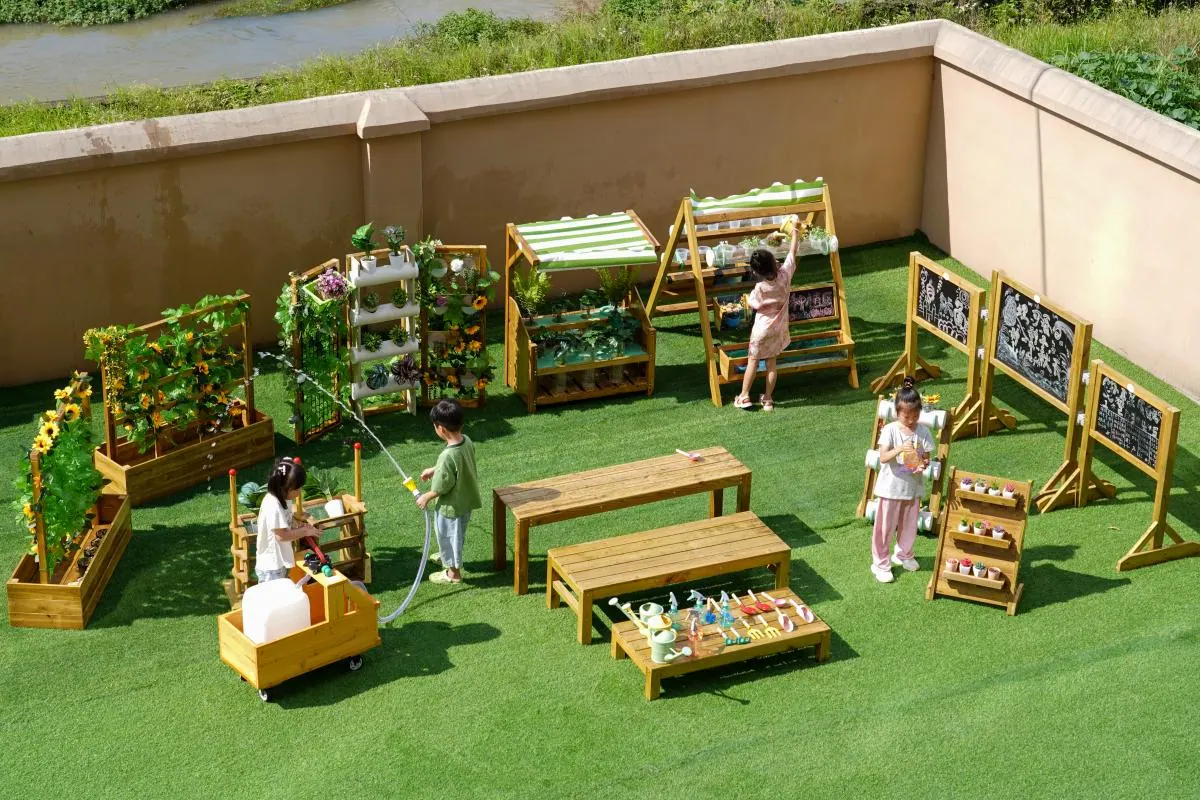
An outdoor area may include raised beds, planting tables, containers, tool storage, and access to water. Select the configuration according to the children’s reach, circulation routes, drainage, climate, supervision, and maintenance capacity.
If permanent outdoor space is unavailable, portable containers can still support observation and care. Plan where containers will be stored during extreme weather and how excess water will be controlled indoors.
12 Preschool Garden Theme Activities
1. Plant Seeds and Predict What Will Happen
Invite children to examine a few suitable seeds before planting. Ask what they notice about color, size, shape, and texture. Children can predict which seed may germinate first and later revisit their ideas.
Use labeled containers so children can compare varieties. Choose plants suitable for the local climate and intended setting, and follow the seed supplier’s handling instructions.
2. Create a Plant Growth Journal
Photograph or draw the plants at regular intervals. Place the records in chronological order and discuss what changed and what remained the same.
Educators can add the date and dictate children’s comments. Older preschoolers may make marks, copy plant names, or use symbols to represent sun, rain, and watering.
3. Measure a Growing Plant
Use equal-sized blocks, linking units, a paper strip, or another consistent non-standard unit to measure a stem or leaf. Ask children to compare today’s measurement with an earlier record.
The goal is not perfect precision. Children are exploring why the same starting point and measurement unit are needed when making comparisons.
4. Sort Seeds, Leaves, or Garden Models
Offer a small collection of suitable objects and invite children to create sorting rules. They might sort by shape, color, size, surface, or function.
Ask, “Could we organize these another way?” A single collection can produce several classification systems and encourage children to explain their reasoning.
5. Sequence the Plant Life Cycle
Use photographs, drawings, or wooden puzzle pieces to represent selected stages, such as seed, root, shoot, young plant, flower, and fruit. Connect the sequence to the plants children are actually growing whenever possible.
Avoid presenting every plant as if it follows an identical visible sequence. Compare two familiar species and discuss their similarities and differences.
6. Investigate the Parts of a Plant
Examine a suitable whole plant, photograph, model, or puzzle. Identify visible features such as roots, stems, leaves, flowers, seeds, or fruit according to the selected specimen.
Wooden seed puzzle can complement real observations by giving children a reusable representation to assemble and discuss.
7. Design a Pretend Flower Shop
Children can arrange artificial flowers, prepare bouquets, take customer orders, and make delivery labels. Add photographs of local flowers and simple signs in the languages used by the classroom community.
This activity can combine storytelling, early writing, quantity, color matching, and cooperative role play without requiring every child to follow the same script.
8. Count and Prepare Garden Orders
Create picture-based order cards such as “two red flowers and three yellow flowers” or “four carrots in one basket.” Children can count the objects, check the order, and deliver it to the dramatic-play shop.
Adjust the quantity and visual support to the children’s experience. For younger groups, begin with one-to-one matching rather than written numerals.
9. Explore Pollinators and Garden Visitors
Observe bees, butterflies, beetles, birds, or other visitors from a suitable distance. Use photographs and books to investigate why some animals visit particular plants.
The butterfly puzzle can help children examine a simplified model before or after outdoor observation. Educators can also use resources from the Xerces Society for Invertebrate Conservation when planning pollinator learning.

10. Make Garden Prints and Observational Art
Offer washable paint, paper, and suitable leaves or vegetables for printing. Another option is to place a plant at the center of the art table and invite children to draw its lines, colors, and shapes.
Keep the activity process-focused. Children do not need to produce identical flowers or complete a teacher-made model.
11. Plan a Picture-Based Garden Scavenger Hunt
Create a short visual list of observable features, such as a round leaf, a yellow flower, a rough surface, an insect, or a fallen seedpod. Children can point, draw, or photograph what they find rather than collecting every item.
Set clear boundaries and explain which plants and animals should only be observed. Adapt the list to the local season so children have a realistic opportunity to find the features.
12. Assign Shared Garden-Care Tasks
Create simple rotating responsibilities such as checking soil moisture with an educator, carrying an empty watering can, watering a designated container, returning tools, or recording a change.
Plant care should not become a reward reserved for the fastest child. Provide different roles so children with varied physical, communication, and sensory needs can participate meaningfully.

A Simple One-Week Preschool Garden Plan
This sample sequence can introduce the theme, but educators should adapt the timing to children’s questions and the pace of actual plant growth.
Monday: Explore and Ask Questions
- Read a garden-themed picture book.
- Examine several suitable seeds.
- Record what children already know and what they want to discover.
Tuesday: Plant and Label
- Prepare containers and plant selected seeds.
- Add picture or word labels.
- Discuss what the plants may need.
Wednesday: Count, Sort, and Compare
- Sort garden models, pictures, or suitable natural items.
- Prepare picture-based garden orders.
- Compare quantities, lengths, or container sizes.
Thursday: Observe and Document
- Inspect the planted containers.
- Draw or photograph visible changes.
- Revisit the children’s original predictions.
Friday: Create and Share
- Make garden prints or observational drawings.
- Use the flower shop or produce market for extended role play.
- Share discoveries and choose a question to investigate next week.
Choosing Materials for a Preschool Garden Theme
A balanced garden project combines live materials, durable classroom resources, books, images, and simple recording tools. More materials do not automatically create better learning.
Useful Core Materials
- Appropriately sized planting containers or raised planters.
- Child-accessible watering cans and suitable gardening tools.
- Low storage for returning tools and supplies.
- Wooden vegetables, fruits, flowers, or garden figures for role play.
- Sorting trays, baskets, magnifiers, clipboards, and measuring materials.
- Plant-life-cycle and garden vocabulary resources.
Questions for Institutional Buyers
- Is the equipment intended for indoor use, outdoor use, or both?
- What materials, coatings, and hardware are used?
- How will the product handle moisture, sunlight, soil, and repeated cleaning?
- Are drainage, anchoring, or ground-preparation measures required?
- Can children reach the work surface and storage safely?
- Are assembly, inspection, and maintenance instructions supplied?
- Which reports or compliance documents apply to the exact product and destination market?
Garden Activity Safety and Hygiene
Educational centers should assess each activity according to the children, materials, local environment, and applicable policies. Important considerations include:
- Plant selection: Verify the identity and suitability of every plant. Avoid species with toxic parts, irritating sap, sharp thorns, or other unsuitable characteristics.
- Small objects: Seeds, dry beans, stones, beads, and miniature garden items may present ingestion or choking concerns. Select materials according to the users and maintain appropriate supervision.
- Soil and compost: Use an appropriate growing medium and establish handwashing procedures. Do not allow children to taste garden materials.
- Food activities: Follow the center’s allergy, hygiene, food-preparation, and family-permission policies before children taste harvested produce.
- Tools: Inspect tools for damage and select dimensions, weight, and edges appropriate to the planned activity.
- Outdoor conditions: Plan for shade, hydration, weather, insects, sun protection, and safe circulation.
- Water management: Empty standing water and address wet or slippery surfaces promptly.
Because plant suitability varies by species and location, centers should consult reliable local horticultural, public-health, or poison-control resources when planning a children’s garden.
Adapting Garden Activities for Different Learners
Age labels provide only a starting point. Adjust the challenge according to the individual children, group experience, and materials being used.
For Toddlers
- Use large, easy-to-hold materials.
- Offer short routines such as carrying, pouring, and returning a tool.
- Introduce a few concrete words connected to current actions.
- Keep small seeds and loose fillers inaccessible when unsuitable.
For Preschoolers
- Invite sorting, counting, prediction, and simple documentation.
- Add extended garden-shop and nursery role play.
- Compare plants and discuss visible differences.
- Give children shared responsibilities with clear guidance.
For Pre-Kindergarten Groups
- Record measurements and create simple picture graphs.
- Compare predictions with observed results.
- Explore more detailed plant vocabulary.
- Plan part of the garden or learning center collaboratively.
Frequently Asked Questions
Can we create a preschool garden theme without an outdoor garden?
Yes. A windowsill growing area, portable containers, observation table, garden shop, plant puzzles, and documentary photographs can support a meaningful indoor project. Use grow lights only when the equipment and installation are suitable for an educational environment.
Which plants are best for a preschool garden?
There is no universal list because climate, local guidance, allergies, plant parts, maintenance, and intended activities differ. Select clearly identified, non-toxic plants suited to the local conditions and confirm their appropriateness with reliable regional resources.
Can we use beans or rice in a garden sensory bin?
Loose food items may be unsuitable for children who mouth objects and may also raise allergy, hygiene, pest, or choking concerns. Conduct a risk assessment and consider larger reusable garden models, fabric materials, paper pieces, or other appropriate alternatives.
How long should a garden theme last?
It can begin as a one-week introduction, but genuine plant growth takes longer. Continuing a small observation and care routine after the initial theme lets children revisit predictions and notice gradual change.
What should buyers check when ordering outdoor planting equipment?
Confirm dimensions, accessibility, materials, finish, weather resistance, drainage, stability, installation, maintenance, packaging, replacement parts, and applicable documentation for the destination market.
Build a Preschool Garden Learning Area with Sing2sky
A successful preschool garden theme gives children time to observe, care, compare, represent, and revisit their ideas. Begin with a manageable growing project, connect it to several classroom centers, and adapt the environment in response to children’s questions.
Sing2sky manufactures wooden educational products, classroom furniture, outdoor planting equipment, and dramatic-play resources for educational distributors, importers, preschool groups, and project suppliers.
For wholesale, private-label, OEM, or ODM projects, contact Sing2sky with your target market, intended age group, site conditions, required quantities, and customization needs.







